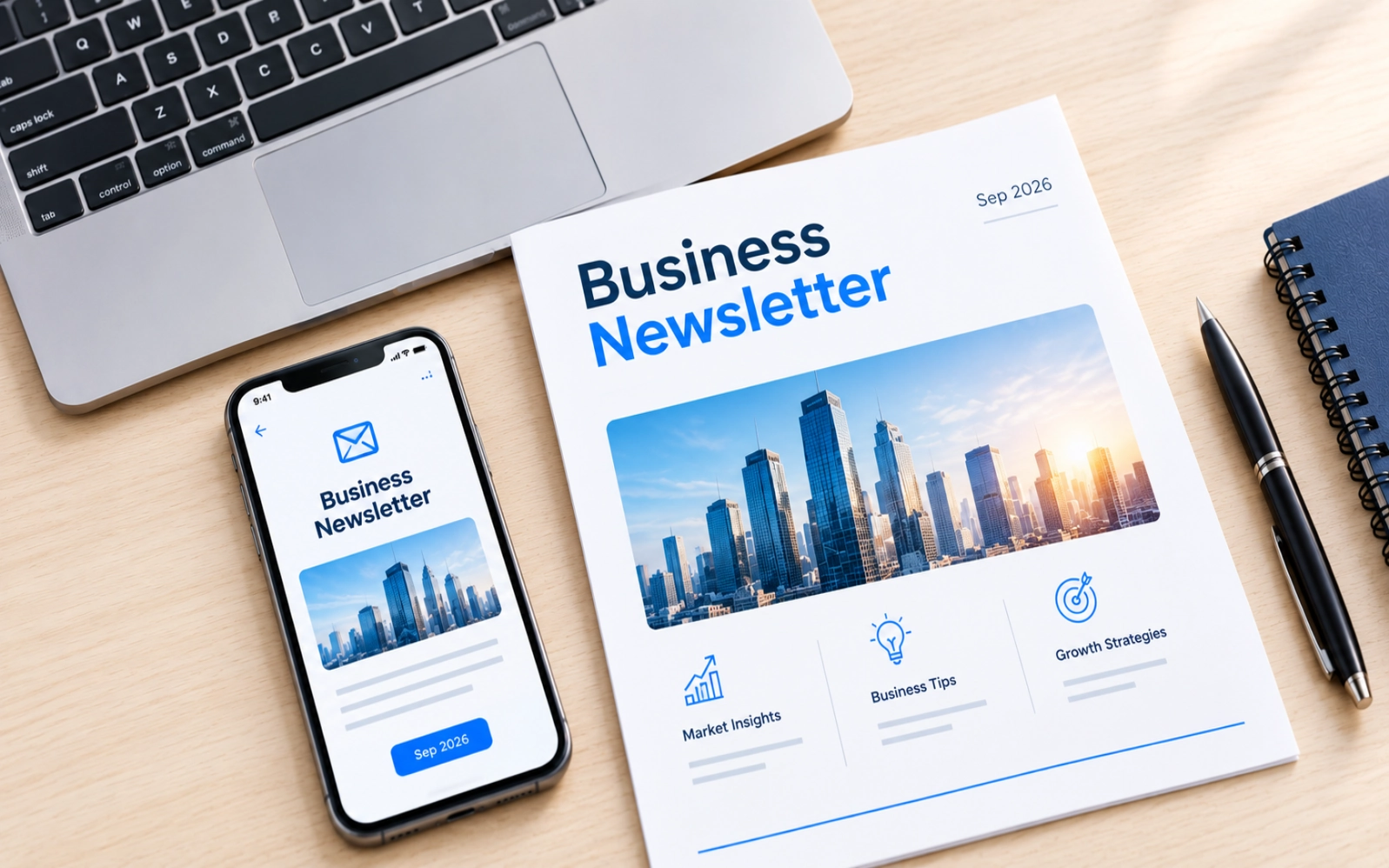
1. Introduction: Why Email Newsletters Still Matter
You may have heard people say that email marketing is no longer relevant. In reality, email remains ways for a business to communicate with its audience. Social media platforms can change their algorithms at any time, but an email subscriber list gives you a direct connection with the people who have chosen to hear from you. A successful business newsletter is about sharing company news. It is an opportunity to build trust, give useful information, and develop lasting relationships with customers.
2. Start by Defining Your Newsletter’s Main Goal
Before you draft your first newsletter, pause and clarify its purpose. Do you want to drive more traffic to your site, boost product sales, distribute industry insights, or establish yourself as an authority in your niche? Attempting to hit all of these targets in a single email often dilutes your message. Instead, choose one clear focus. If your priority is educating your audience, fill the newsletter with valuable content and keep sales pitches to a minimum. If selling is your primary aim, present your offer plainly while still giving subscribers a compelling reason to keep reading.3. Get to Know Your Target Readers.
3. Get to Know Your Target Readers
Think carefully about the people who will be reading your emails. What challenges do they face? What are they trying to achieve? What type of information would actually make their work or daily life easier? Writing for everyone often results in content that does not feel relevant to anyone. Instead, picture the type of person you most want to reach. Creating a basic customer profile can help you choose better topics and decide which ideas are worth including in your newsletter. It also makes it easier to leave out information that does not serve your audience.
4. Choose an Email Marketing Service
Running a professional newsletter through an ordinary personal inbox simply isn’t workable. Dedicated email marketing tools, Mailchimp, ConvertKit, and Substack, for example, take care of much of the technical heavy lifting behind newsletter distribution. They give you ways to organize your audience, handle opt-outs automatically, measure performance, and boost the odds that your emails actually reach the inbox. On top of that, most of these platforms offer automation features that can free up a significant amount of your time as your list expands. Weigh the features each option provides, then pick one that suits both what you need today and where you expect to be down the road.
5. Build a Subscriber List With the Right People
Having thousands of subscribers does not automatically mean you have a successful newsletter. A smaller list filled with people who actually read and interact with your emails can be much more valuable than a huge list of inactive accounts. Give visitors a valid reason to subscribe. You could offer a free guide, useful checklist, discount, template, or another resource that matches their interests. Add signup forms to useful areas of your website, such as the footer, blog pages, or an appropriate popup. Always explain what subscribers can expect after they join.
6. Use a Simple Design That Encourages Reading
A newsletter does not need a complicated design to look professional. In reality, too many elements can make an email harder to read. Keep your layout clean, well-spaced, and easy to navigate on smaller screens. Since many people check email from their phones, your newsletter should work properly on mobile devices. Use short sections, clear headings, enough white space, and a noticeable call to action. The reader should be able to understand the message rapidly and know what to do next.
7. Give Readers Content Worth Opening
Nobody wants to receive an email that feels like a constant advertisement. Your newsletter should provide something useful each time you send it. Consider sharing practical advice, tutorials, industry updates, personal experiences, helpful resources, or lessons you have learned. A useful approach is to keep the majority of your content focused on helping the reader and use a smaller portion for promotions. Important, your personality come through. Write in a conversational way rather than filling the newsletter with stiff corporate language.
8. Write Subject Lines That Make People Curious
The subject line has an important job: convincing the recipient to open the email. Even excellent content will be ignored if the subject line does not attract attention. Avoid exaggerated promises or misleading clickbait. Instead, give readers a genuine reason to open the message. You can highlight a benefit, ask an interesting question, create curiosity, or mention something timely. Try different styles and compare the results. Over time, you will learn which types of subject lines connect best with your particular audience.
9. Go Beyond Using First Names for Personalization
Adding a subscriber’s first name to an email is a simple form of personalization, but it is only the beginning. More useful personalization comes from understanding what people actually do with your content. For example, if someone regularly clicks on articles about productivity, you could send that person more content related to the same subject. Dividing your audience into smaller groups allows you to send more relevant messages. Instead of treating your entire subscriber list as one large group, you can make the content feel more suitable for individual interests.
10. Make Consistency Part of Your Newsletter Routine
If someone subscribes and then doesn’t hear from you again for months, they’ll likely lose track of why they joined your list. Pick a sending rhythm you can genuinely stick to whether that’s weekly, biweekly, or monthly. There’s no point flooding inboxes if the quality suffers as a result. When readers know when to expect you, your newsletter starts to feel familiar, and over time it can earn a regular spot in their routine.
11. Use Testing to Improve Newsletter Performance
Your initial strategy won’t always turn out to be your strongest. Most email marketing platforms build in testing tools that let you put different versions of a message head-to-head. You could try out two subject lines, alternate layouts, or competing calls to action, then see which one draws a better response. Watch your open rates, click-through rates, and bounce rates closely. Whenever a tactic delivers good results, find ways to expand on it. Whenever an idea falls flat, take that as valuable feedback and pivot to a different approach.
12. Respect Email Marketing Laws and Subscriber Privacy
People should give permission before being added to your marketing list. Email regulations, including GDPR and the CAN-SPAM Act, establish requirements intended to protect email recipients. The exact rules can depend on where your business and subscribers are located, so make sure your email practices meet the requirements that apply to you. Your messages should also provide an easy way for subscribers to unsubscribe. Losing a few subscribers is less important than maintaining a healthy list of people who genuinely want to receive your content.
13. Measure Engagement Instead of Only Counting Subscribers
It is easy to focus on the number of people on your email list, but subscriber count alone does not tell the whole story. Look at how people actually respond to your messages. Are they opening your emails? Are they clicking links or replying to your messages? Are they sharing your content with others? These actions can provide a clearer picture of whether your newsletter is connecting with its audience. A smaller list with active readers can be healthier than a much larger list filled with people who never interact with your emails.
Conclusion
A successful business newsletter does not usually happen overnight. It takes time to understand your audience, develop a suitable writing style, and discover which topics and formats work best. The important thing is to keep providing useful content and communicate with your subscribers consistently. Respect their time, pay attention to their interests, and use your results to improve future emails. You do not need to wait until everything is perfect. Start with your first newsletter, see how people respond, and use what you learn to make the next one better.
Frequently Asked Questions (FAQs)
1. How frequently should I send my newsletter?
The ideal frequency depends on your business, audience, and ability to create useful content. Many businesses choose a weekly schedule, while others send newsletters twice a month or once a month. The most important thing is to choose a schedule you can maintain. Sending two useful emails every month is better than sending emails every day for one week and then disappearing for several weeks.
2. What is the easiest way to grow an email list from scratch?
Start by giving people a worthwhile reason to subscribe. You could provide a free checklist, ebook, guide, discount, template, or another resource that is relevant to your audience. Promote your signup offer through your website and social media accounts. Keep the registration process simple and only request information that you genuinely need, such as an email address and possibly a first name.
3. Why do some subscribers leave my email list?
Unsubscribing is a normal part of email marketing. Someone may leave because the content is no longer relevant to them, they receive too many emails, or they are simply trying to reduce the number of messages in their inbox. Instead of seeing every unsubscribe as a failure, use it as feedback. Your goal is to maintain a list of people who are genuinely interested in what you have to say.
4. Should I purchase an email list to get subscribers quickly?
Buying an email list is not a good strategy for building a legitimate newsletter. People on a purchased list have not necessarily agreed to receive your messages, which can result in spam complaints and poor email delivery. It can also hurt your sender reputation and may violate the terms of your email marketing provider. Build your list through genuine signups from people who have chosen to receive your content.
5. How can I make my newsletter work well on mobile phones?
Use a email template that adjusts to different screen sizes. Avoid unnecessarily wide images or layouts that force readers to scroll from side to side. Before sending your newsletter to everyone, send a test message to your own phone and check the layout, links, images, and buttons.

pjrveizfrwftqxzpfnjqmhzumwteii